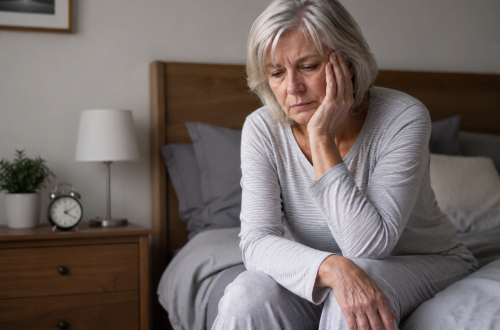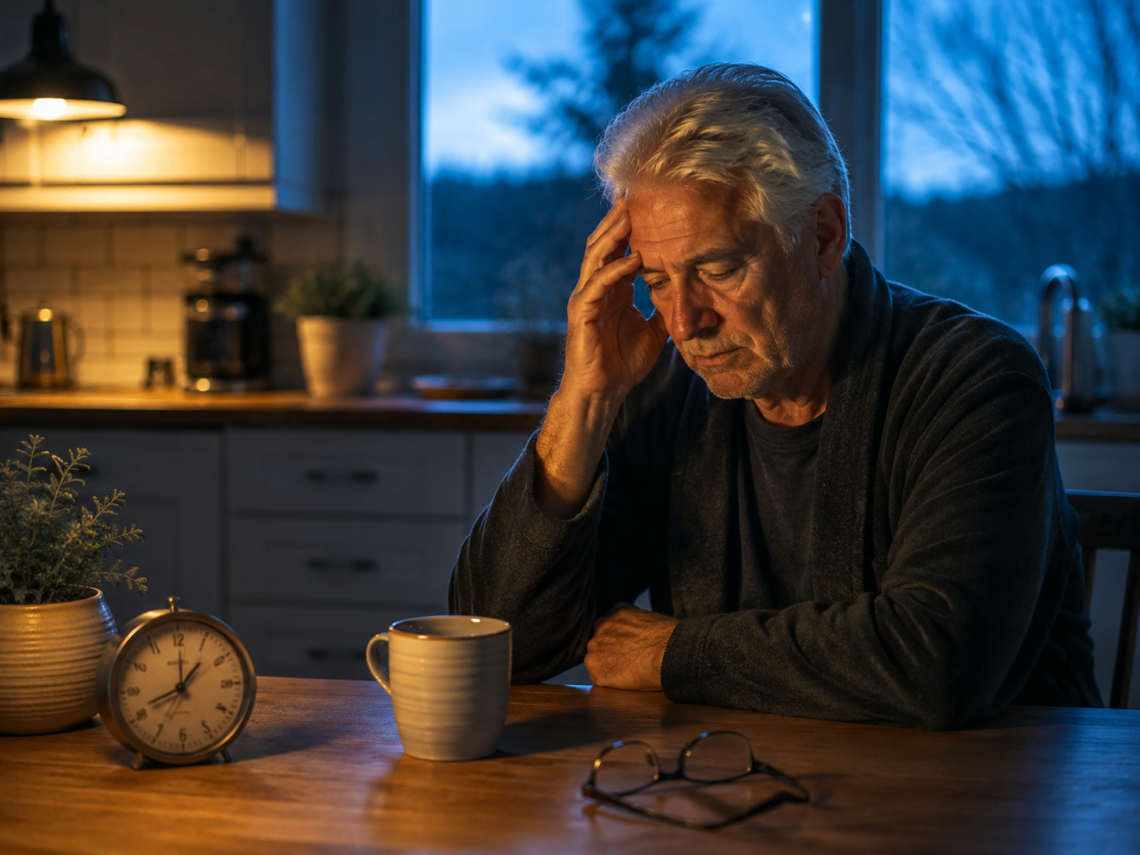
Sleep can change a lot after age 50. You may still go to bed at a normal time, stay in bed long enough, and do everything that used to work, but suddenly your sleep feels lighter, shorter, or less refreshing.
The frustrating part is that many sleep problems do not look dramatic at first. You may simply wake up more often, feel tired in the morning, need more coffee, or notice that your energy drops earlier in the day.
But here is where it gets important.
Sleep problems after 50 are not always “just aging.” Aging can change sleep, but sleep disruption can also come from breathing problems, pain, stress, medications, hormones, bladder changes, or lifestyle habits that quietly affect the body at night.
Here are 7 common sleep problems after age 50, and what may be causing them.
Quick Answer: Why Sleep Often Changes After 50
After age 50, sleep may become lighter, more interrupted, or less refreshing. The most common causes include insomnia, sleep apnea, nighttime urination, pain, restless legs, stress, and changes in the body clock.
Insomnia
Trouble falling asleep or staying asleep.
Sleep Apnea
Breathing pauses that interrupt sleep.
Nighttime Urination
Bathroom trips that break deep sleep.
Restless Legs
Leg discomfort that gets worse at night.
1. Trouble Falling Asleep
One of the most common sleep problems after 50 is lying in bed tired, but unable to fall asleep.
This can feel confusing because the body is tired, but the mind is still active. You may replay the day, think about family, worry about money, plan tomorrow, or simply feel restless without a clear reason.
Possible causes include:
- Stress or anxiety
- Too much screen time before bed
- Caffeine too late in the day
- Irregular sleep and wake times
- Low physical activity during the day
- Certain medications
- Pain, reflux, or breathing discomfort
This is the first trap. Many people try to fix insomnia by spending more time in bed. But lying awake in bed for hours can train the brain to associate bed with frustration instead of sleep.
A better first step is usually to look for patterns. What time do you drink caffeine? When do you stop using screens? Are you going to bed at different times every night? Is your mind racing because your day never really had a clear ending?
2. Waking Up Several Times During The Night
Another common problem is falling asleep fine, then waking up again and again through the night.
This kind of broken sleep can make 8 hours in bed feel like 5 hours of real rest. You may not even remember every wake-up, but your body can still feel the effect the next morning.
Possible causes include:
- Noise
- Room temperature changes
- Snoring or breathing pauses
- Bathroom trips
- Joint pain or back pain
- Alcohol close to bedtime
- Stress hormones staying elevated at night
The key question is not only “How many hours did I sleep?” The better question is “How many times was my sleep interrupted?”
Mini Visual: Why Broken Sleep Feels So Bad
Your body needs steady sleep cycles. When sleep keeps getting interrupted, deeper recovery can get cut short.
Steady Sleep
The body moves through light sleep, deep sleep, and dream sleep in a more complete rhythm.
Broken Sleep
Bathroom trips, stress, pain, or snoring pull the body out of deeper sleep again and again.
3. Loud Snoring Or Sleep Apnea Symptoms
Snoring is easy to dismiss. Many people treat it like a normal part of getting older.
But loud snoring can sometimes point to sleep apnea, especially when it comes with gasping, choking, morning headaches, dry mouth, or heavy daytime sleepiness.
Sleep apnea happens when breathing repeatedly slows or stops during sleep. The brain briefly wakes the body to restart breathing. This can happen many times per night, often without the person remembering it.
Possible risk factors include:
- Older age
- Weight gain around the neck or upper body
- Alcohol close to bedtime
- Smoking
- Family history
- Large neck, tongue, or tonsils
- Heart, kidney, or hormone-related conditions
Possible Signs Of Sleep Apnea
This does not mean you definitely have sleep apnea. But if several signs are present, it is worth getting checked.
This is one sleep issue you do not want to ignore, because poor nighttime breathing can affect more than sleep quality.
4. Waking Up Too Early And Not Falling Back Asleep
Many adults after 50 notice they wake earlier than they used to. Sometimes that early wake-up feels natural. Other times, it feels like the body woke up too soon and refuses to fall back asleep.
This can happen because the body clock changes with age. Some people naturally start feeling sleepy earlier in the evening and waking earlier in the morning.
But waking too early can also be connected to stress, depression, alcohol, inconsistent sleep timing, or spending too much time in bed trying to force extra sleep.
Possible causes include:
- Age-related body clock changes
- Going to bed too early
- Low morning light exposure
- Depression or anxiety
- Alcohol disrupting the second half of sleep
- Long daytime naps
Here is the part that feels backwards. Going to bed earlier is not always the fix. If your body clock is already shifted earlier, an earlier bedtime may make the early waking worse.
5. Nighttime Bathroom Trips
Waking up to use the bathroom becomes more common with age, but frequent nighttime urination can still seriously damage sleep quality.
The problem is not only the bathroom trip. The bigger problem is what happens after it. You may fully wake up, turn on lights, check the time, start thinking, and then struggle to fall back asleep.
Possible causes include:
- Drinking too much fluid late in the evening
- Diuretic medications
- Bladder changes
- Prostate changes in men
- Blood sugar problems
- Sleep apnea
- Heart or kidney-related fluid balance issues
Bathroom Trips: Simple Pattern Check
Occasional
Happens once in a while, often after more evening fluids.
Frequent
Happens most nights and breaks sleep repeatedly.
Worth Checking
New, worsening, painful, or paired with thirst, swelling, or urinary changes.
If nighttime bathroom trips are frequent, new, or getting worse, it is worth discussing with a healthcare professional instead of assuming it is just age.
6. Restless Legs Or Uncomfortable Leg Sensations
Restless legs can make sleep feel almost impossible.
People often describe it as an urge to move the legs, crawling sensations, tingling, pulling, aching, or discomfort that gets worse when resting. It often becomes more noticeable in the evening or at night.
The frustrating part is that moving the legs may help for a short time, but the feeling often returns when you lie still again.
Possible causes or links include:
- Iron deficiency
- Kidney disease
- Some medications
- Family history
- Nerve-related changes
- Caffeine, alcohol, or nicotine sensitivity
This is different from simply being restless. If leg discomfort repeatedly delays sleep or wakes you up, it is worth tracking and bringing up with a healthcare professional.
7. Waking Up Tired Even After Enough Sleep
This is one of the most frustrating sleep problems after 50. You technically slept long enough, but you still wake up tired.
This usually means the issue is not only sleep duration. It may be sleep quality, oxygen levels, stress, pain, blood sugar changes, medications, or another health issue affecting recovery during the night.
Possible causes include:
- Sleep apnea
- Fragmented sleep
- Chronic stress
- Pain or inflammation
- Alcohol disrupting deep sleep
- Too little deep sleep
- Medication side effects
- Depression or low mood
- Low iron, thyroid issues, or other health problems
The 3-Part Sleep Check
If you wake up tired, do not only look at bedtime. Look at these three areas together.
Sleep Length
Did you give yourself enough time to sleep?
Sleep Quality
Was your sleep deep and steady, or broken?
Morning Function
Do you wake clear, or foggy and heavy?
What May Be Driving Sleep Problems After 50?
Sleep problems often have more than one cause. That is why fixing one small habit sometimes helps, but does not fully solve the problem.
For example, someone may have mild sleep apnea, drink caffeine too late, and wake twice to use the bathroom. Another person may have pain, stress, and a body clock that has shifted earlier.
The sleep problem may look the same from the outside, but the cause can be completely different.
Simple Cause Map
A sleep problem is often the visible symptom. The cause may sit underneath it.
Body
Pain, hormones, bladder changes, breathing, restless legs.
Mind
Stress, anxiety, grief, low mood, racing thoughts.
Habits
Caffeine, alcohol, late meals, screens, naps, irregular schedule.
Environment
Noise, light, heat, poor mattress support, partner movement.
A Simple 7-Day Sleep Problem Checklist
Before changing everything, track your sleep for one week. This can help you spot patterns that are easy to miss.
7-Day Sleep Tracker
Write these down each morning. Patterns usually appear quickly.
- What time you went to bed
- What time you woke up
- How many times you woke during the night
- Whether you woke to use the bathroom
- Whether you snored, gasped, or woke with dry mouth
- Whether you had leg discomfort at night
- Caffeine timing
- Alcohol intake
- Screen time before bed
- Morning energy from 1 to 10
Once you see the pattern, the next step becomes clearer. You may need a habit change, a better sleep routine, or a medical check for something like sleep apnea, restless legs, medication side effects, or nighttime urination.
When To Speak With A Healthcare Professional
Many sleep problems can improve with routine changes. But some signs should be checked instead of ignored.
Pay Closer Attention If You Notice This
- Loud snoring with gasping or choking
- Morning headaches
- Daytime sleepiness that affects driving or daily tasks
- Frequent nighttime urination that is new or getting worse
- Leg discomfort that repeatedly stops you from sleeping
- Chest pain, shortness of breath, dizziness, or swelling
- Severe fatigue despite enough sleep
- New sleep problems after starting a medication
Sleep problems are common after 50, but common does not mean harmless. The goal is not to panic. The goal is to notice what your body is repeatedly showing you.
FAQ
Do people need less sleep after age 50?
Not usually. Many adults still need around 7 to 9 hours of sleep. What often changes with age is sleep quality, sleep timing, and how often sleep gets interrupted.
Why do I wake up more often now than I used to?
Possible causes include lighter sleep, stress, bathroom trips, pain, alcohol, medications, snoring, sleep apnea, or body clock changes. Tracking your sleep for a week can help show the pattern.
Is snoring normal after 50?
Snoring is common, but loud snoring with gasping, choking, morning headaches, or daytime sleepiness may point to sleep apnea. That should be discussed with a healthcare professional.
Why do I wake up at 3 AM and struggle to fall back asleep?
This can happen from stress, alcohol, bathroom trips, blood sugar changes, body clock changes, pain, or sleep apnea. The cause is not always obvious from one night, so tracking patterns can help.
Can medications affect sleep?
Yes. Some medications can make sleep harder, lighter, or more interrupted. Do not stop a prescribed medication on your own. Ask a healthcare professional if sleep changed after starting or changing a medication.
When should I get help for sleep problems?
Get checked if sleep problems are frequent, worsening, affecting daily life, or paired with loud snoring, breathing pauses, chest symptoms, severe fatigue, morning headaches, or daytime sleepiness.
Educational Disclaimer
This article is for educational purposes only and is not medical advice. If you have ongoing sleep problems, severe fatigue, loud snoring, breathing pauses during sleep, chest pain, dizziness, new nighttime urination, or any concerning symptoms, speak with a qualified healthcare professional.