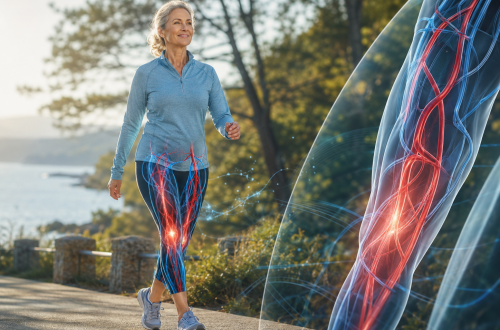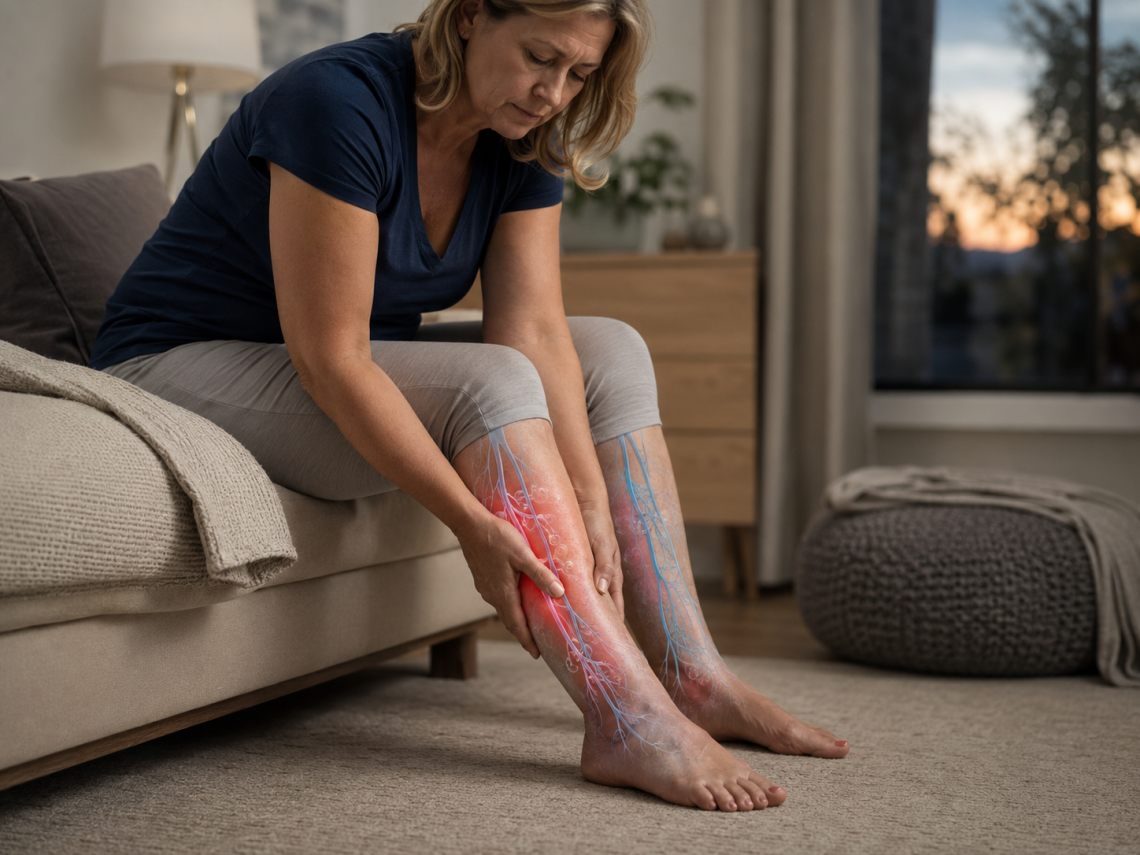
Heavy, swollen legs at the end of the day can feel strange at first.
Your shoes feel tighter. Your socks leave deeper marks. Your ankles look puffier than they did in the morning. Your legs may feel tired, stretched, heavy, or harder to move.
Many people blame age, standing too long, heat, or being busy.
Sometimes that is exactly what it is. But repeated leg heaviness and swelling can also be a clue that fluid is not moving through the body as well as it should.
The important part is not panic. The important part is noticing the pattern.
Quick answer
Legs may feel heavy and swollen by the end of the day because gravity pulls fluid downward while you sit or stand. This can be made worse by inactivity, heat, salt, extra body weight, vein problems, certain medications, or medical issues affecting the heart, kidneys, liver, lymph system, or blood flow.
The End-Of-Day Pattern Matters
Swelling that builds during the day and improves overnight often tells a different story than swelling that appears suddenly, affects only one leg, or comes with pain, redness, warmth, chest symptoms, or shortness of breath.
That is why timing matters.
If your legs look normal in the morning but feel heavy and puffy by evening, gravity and circulation may be involved. When you stand or sit for long periods, blood and fluid have to work against gravity to move back up toward the heart.
If that return flow is slowed, fluid can collect in the lower legs, ankles, and feet.
Your legs are the lowest point for much of the day. That makes them the place where fluid buildup often becomes most visible.
After lying down overnight, fluid may be more evenly distributed and swelling may look lower.
Standing, sitting, heat, salt, and low movement can make fluid settle into the lower legs.
Shoes feel tighter, ankles look puffier, and legs may feel heavy, tired, or stretched.
1. Sitting Or Standing Too Long
The simplest cause is also one of the most common.
If you sit or stand in one position for hours, the muscles in your legs are not helping push blood and fluid upward as much as they normally would. This can make your ankles and lower legs feel heavy by the end of the day.
This can happen after:
- Long desk work
- Long car rides or flights
- Standing at work
- Hot weather
- Low daily movement
- Sitting with legs down for many hours
The key clue is that the swelling is usually mild, affects both legs, and improves after walking, resting, or elevating the legs.
Your leg muscles are part of the return system. When you do not move much, the pump works less. That can make your legs feel heavier even if nothing “major” happened that day.
2. Veins That Are Not Moving Blood Back Efficiently
Another common reason for heavy, swollen legs is poor vein function.
Veins in the legs have valves that help blood move back toward the heart. If those valves weaken or do not close properly, blood can pool in the legs. This can increase pressure in the veins and lead to swelling, heaviness, aching, or visible varicose veins.
This is often called chronic venous insufficiency.
Possible signs include:
- Leg heaviness that gets worse later in the day
- Swollen ankles or lower legs
- Aching or throbbing legs
- Varicose veins
- Skin changes around the ankles
- Legs feeling better when elevated
| Normal return flow | Leg muscles and vein valves help move blood upward toward the heart. |
| Slowed return flow | Blood and fluid can pool lower in the legs, especially after standing or sitting. |
| What you may notice | Heaviness, swelling, aching, sock marks, or visible veins by evening. |
3. Fluid Retention From Salt, Heat, Or Hormonal Changes
Not every swollen-leg day means something serious is happening.
Some people notice puffier legs after salty meals, hot weather, alcohol, travel, or days with less movement. In some adults, hormonal changes can also affect fluid balance.
This kind of swelling may feel worse around the ankles and feet because fluid tends to settle downward during the day.
Common triggers include:
- Salt-heavy meals
- Hot weather
- Alcohol
- Long travel days
- Low water intake
- Long periods without walking
- Certain medication changes
Mild swelling in both legs after heat, salt, travel, or long sitting that improves with rest and elevation.
Swelling that is new, worsening, painful, one-sided, persistent, or comes with breathing, chest, or skin changes.
4. Medication Side Effects
Some medications can contribute to leg swelling. This does not mean you should stop taking a prescribed medication on your own.
It does mean that new swelling is worth mentioning to your healthcare professional, especially if it started after a new medication, dose change, or treatment change.
Medication-related swelling can vary from mild to more noticeable. It may affect both legs and become more visible later in the day.
Track when the swelling started, what changed around that time, and whether it improves overnight. That information can help your healthcare professional decide what to check next.
Ask yourself these three questions before your next appointment.
5. Lymph Fluid That Is Not Draining Well
The lymphatic system helps clear extra fluid from tissues. If lymph flow is disrupted, fluid can collect and cause swelling.
This is often called lymphedema.
Lymphedema may happen after lymph node removal, cancer treatment, infection, injury, or other conditions that affect lymph drainage. In some cases, it develops gradually.
It may cause:
- Persistent swelling
- A heavy or tight feeling
- Skin that feels thicker or tighter
- Swelling that does not fully improve overnight
- One limb looking noticeably different from the other
If swelling is persistent or one side is clearly different, it should be checked instead of ignored.
6. Heart, Kidney, Or Liver-Related Fluid Buildup
Leg swelling can sometimes be a sign that the body is having trouble managing fluid.
The heart, kidneys, and liver all play roles in circulation and fluid balance. If one of these systems is not working as well as it should, swelling may show up in the legs, ankles, feet, or sometimes other areas of the body.
This is especially important when swelling affects both legs and comes with other symptoms.
Leg swelling deserves faster medical attention if it comes with symptoms that suggest the body is under strain.
These symptoms do not prove one specific condition, but they are strong reasons to seek medical advice promptly.
7. A Blood Clot In The Leg
One of the most important causes not to miss is a blood clot in a deep vein, often called deep vein thrombosis or DVT.
DVT can cause swelling, pain, tenderness, warmth, redness, or skin color changes in the affected leg. It often affects one leg, though symptoms can vary.
This matters because a clot can become dangerous if part of it travels to the lungs.
Sudden swelling in one leg should be taken seriously, especially if the leg is painful, warm, red, tender, or looks different from the other leg.
One Leg vs Both Legs: Why It Matters
The pattern of swelling can help guide what to do next.
One-sided swelling often raises different concerns than swelling in both legs. Both-leg swelling may be related to fluid retention, standing, sitting, venous issues, medications, or body-wide fluid balance. One-leg swelling may be more concerning for a clot, injury, infection, or local circulation issue.
| Both legs, mild, worse by evening | May happen with sitting, standing, heat, salt, vein issues, medications, or fluid retention. |
| One leg, sudden, painful, warm, or red | Needs prompt medical attention because a blood clot or infection may need to be ruled out. |
| Both legs plus shortness of breath or chest symptoms | Needs urgent medical attention because heart, lung, or serious circulation problems may be involved. |
Small Changes That May Help Mild End-Of-Day Swelling
If your swelling is mild, affects both legs, improves overnight, and has no red-flag symptoms, simple habits may help reduce end-of-day heaviness.
The goal is to help fluid move instead of letting it sit in the lower legs for hours.
Gentle movement helps the leg muscles pump fluid upward.
Raising the legs can help fluid move away from the ankles and feet.
Stand, walk, or move your ankles throughout the day instead of waiting until evening.
Notice whether swelling follows salt, heat, travel, long standing, or low movement days.
What To Track For 7 Days
A simple log can make the cause easier to spot.
Instead of only writing “legs swollen,” track when it happens, what it looks like, and what makes it better or worse.
Use this for one week before guessing what the problem is.
| Morning | Do ankles look normal, or is swelling already present? |
| Evening | Are shoes tighter, socks leaving marks, or legs feeling heavy? |
| Pattern | Was the day hot, salty, inactive, travel-heavy, or spent mostly standing? |
| Relief | Did walking, elevation, or overnight rest improve it? |
This gives your healthcare professional a clearer picture if the swelling continues or worsens.
When To Get Medical Help
Leg swelling is common, but some patterns should not be handled casually.
Get urgent medical help if leg swelling comes with chest pain, difficulty breathing, shortness of breath, fainting, dizziness, or coughing blood.
Seek prompt medical advice if swelling is sudden, painful, one-sided, warm, red, worsening quickly, or does not improve with rest and elevation.
FAQ
Why do my legs feel heavy at the end of the day?
Legs can feel heavy by evening when fluid pools in the lower legs after sitting, standing, heat, salt, inactivity, or vein-related circulation issues. The pattern matters, especially whether swelling affects one leg or both.
Is swollen ankles at night normal?
Mild swelling after a long day can happen, especially after standing, sitting, heat, travel, or salty meals. Swelling that is new, persistent, painful, one-sided, or linked with shortness of breath or chest symptoms should be checked.
Can poor circulation make legs feel heavy?
Yes. When blood does not move back up from the legs efficiently, heaviness, aching, swelling, and visible veins may happen, especially later in the day.
When should I worry about one swollen leg?
Sudden swelling in one leg, especially with pain, warmth, redness, tenderness, or color change, should be checked promptly because a blood clot may need to be ruled out.
Can drinking more water reduce leg swelling?
Hydration may help general fluid balance, but it does not fix every cause of swelling. Persistent or worsening swelling needs proper evaluation.
Can leg swelling be related to the heart?
Yes. Leg swelling can sometimes be related to heart problems, especially when both legs are swollen and there is shortness of breath, fatigue, chest symptoms, or trouble breathing while lying down.
Educational Disclaimer
This article is for educational purposes only and is not medical advice. If you have sudden one-leg swelling, leg pain, warmth, redness, chest pain, shortness of breath, fainting, dizziness, coughing blood, rapidly worsening swelling, or any concerning symptoms, seek medical help promptly or contact a qualified healthcare professional.